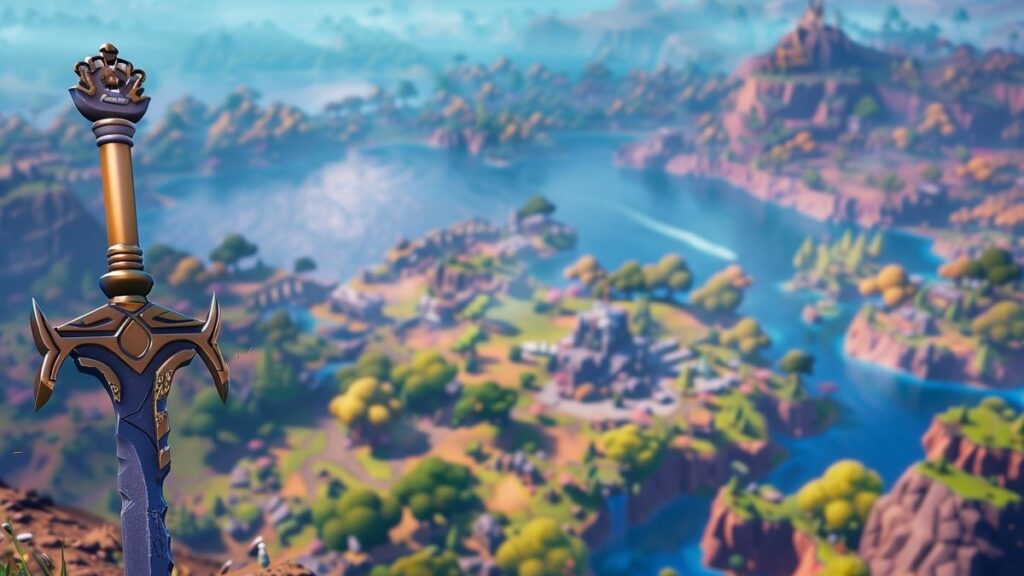
Fortnite is tightening the focus with Fortnite Arenas, a competitive mode built for short-map firefights and fast decisions. Instead of 100-player chaos, you’re in 16-player matches, either solo or duos, grinding round-based wins and stacking points. Win faster, score higher, and climb a global leaderboard that tracks performance beyond just match victories.
The standout feature is blunt and fun: hit “1v1 me” on a friend who’s also listed on the Arena leaderboard, and settle it in an unranked seven-round set. No prizes, no drama, just bragging rights. If you want extra goals, Arenas quests are in the mix, with cosmetic unlocks tied to completion.
Arenas goes live at 7am EST (also 4am PST, 12pm BST, 1pm CEST). If you’ve been waiting for tight competition and cleaner reads, yeah, this is your lane, with quick queue pressure and leaderboard stakes from day one.
What is Fortnite Arenas, and how is it different from Battle Royale?
Fortnite built its identity on large-scale Battle Royale fights, where 100-player lobbies scatter across a huge island and the match rhythm swings between calm looting and chaotic endgames. Fortnite Arenas shifts that whole tempo. Instead of surviving a long match with rotating storms and third parties coming from every angle, Arenas is designed around tight, repeatable duels on smaller arena-style maps. The format is straightforward: 16 players drop in as 16 solos or eight duos, then fight quick rounds to build a points total. The win condition is not “last alive after 25 minutes”; it’s “hit the round-win target first”, specifically 20 round wins for solos or 15 for duos. That difference may sound minor, yet it changes how you practice: you get more fights per hour, more clutch scenarios, and far less downtime. Honestly, if you’ve ever queued Battle Royale just to warm up your aim and edits, you’ll get why this mode feels refreshing. It’s also clearly shaped for competitive play, since performance is tied to points that feed into leaderboards. If you want broader context on how Fortnite keeps expanding its menu of experiences, this breakdown of Fortnite’s different game modes is a solid reference for how Arenas fits into the bigger ecosystem.
How do points and leaderboards work in Fortnite Arenas?
Arenas is built around scoring fast and consistently. Matches reward you for winning rounds, and the quicker you close out fights, the more your score climbs. That “speed bonus” angle encourages clean decision-making: safe peeks, smart material usage, quick resets, and taking fights you can finish instead of dragging them out. Fortnite has teased that the exact ranking system details would be clearer once the playlist is live, yet the direction is obvious: your placement on a global leaderboard depends on points, not just raw match wins. That matters because it reduces the “one lucky run” effect; you can’t just spike a single match and call it a day, you’ll need repeatable results. A practical tip from my own scrims: treat every round like a mini VOD review in real time. Ask yourself, in plain words, “Did I win because I played well, or because my opponent made a mistake ?” That mindset aligns with a points ladder, because it pushes you toward habits that keep working as the competition stiffens. If you’re tracking Fortnite’s broader updates and how they affect competitive integrity, hardware rules and enforcement can also matter; this report on Fortnite hardware-related bans and updates gives useful background on why clean play and consistent setups stay relevant when leaderboards are on the line.
- Play for clean finishes : end fights with a plan, not with panic sprays.
- Track your round tempo : fast wins often beat “safe” slow wins on points.
- Build a repeatable loadout plan : consistency beats improvisation in short formats.
- Review 2 mistakes per match : small fixes compound quickly in a round-based mode.
How can you challenge friends to unranked 1v1 matches?
The headline feature people will talk about at parties, in Discord, or between classes is the direct “1v1 me” friend challenge. If someone on your friends list is also on the global Arena leaderboard, you can send them a request straight from the friends list or their player profile. You’ll see a dedicated button, hit it, and the invite goes out. These matches are unranked, so you’re not risking points, and they are played over seven rounds. The reward isn’t an item drop, prize money, or anything that changes your account; it’s bragging rights, and honestly, that’s the whole charm. It’s the kind of feature that brings back that old-school feeling of settling friendly debates with gameplay instead of chats. I’ve had plenty of those “you edited too slow” conversations, and a structured seven-round set is way better than arguing forever. This system is also a practical training tool: you can test a new sensitivity, practice peeking discipline, or focus on piece control routes without the noise of a full lobby. If you enjoy seeing how Fortnite borrows and remixes ideas from other big games and cultures, you might like this take on a GTA-inspired angle in Fortnite’s wider design, since Arenas feels like another example of Fortnite reshaping familiar competitive formats into its own style.
There’s also a social upside that’s easy to miss. Because the 1v1 is tied to players who show up on the leaderboard, it nudges friend groups to actually engage with the competitive side instead of treating it as something “other people do”. It makes the ladder feel less abstract; you can see a name you recognize and run the set right away. If you want the matchup to feel fair, agree on simple house rules before you queue: same region, same input method if you’re keeping it strict, and a quick check that both players are on stable ping. I’ll say it straight: nothing ruins a clean 1v1 faster than a weird lag spike and a “bro, that didn’t count” argument. When you keep it respectful, though, seven rounds gives enough time for adaptation. If you lose the first two rounds, you can still bring it back by adjusting your angles, taking safer edits, and forcing your opponent into bad retakes. That mid-set adjustment is where Arenas 1v1s can actually teach you things you’ll carry into ranked Arena points matches and even standard Battle Royale endgames.
What rewards and quests come with the Arenas Showdown?
Arenas Showdown doesn’t rely only on competitiveness; it also brings mode-specific quests that give players a reason to grind even if they’re not chasing the top of the table. When those quests go live alongside the mode, completing the full set unlocks cosmetics such as the Builder’s Crest Back Bling and the Cracked Blueprint Spray. Cosmetics matter in Fortnite because they’re a visible signal of what you’ve done, not just what you bought. If you’re the type who likes earning items through gameplay, these quests are a nice heartbeat that keeps the mode active across different skill levels. The smart part is that quests also soften the learning curve: rather than telling new Arena players “win faster or get out”, the game gives them structured objectives that push them to try the playlist, learn the maps, and get comfortable with a tighter fight loop. I’ve seen plenty of players avoid competitive modes because they assume it’s all stress. Quests help flip that feeling into “I’m working on a checklist”, which is a calmer way to improve. And because Arenas matches are short, quest attempts don’t steal your whole evening. If you’re following Fortnite’s wider collaboration culture and how cosmetic rewards often tie into events, these reads on the Fortnite and Disney collaboration and the Toy Story Buzz content in Fortnite are useful context for how Fortnite treats collectibles as part achievement, part community conversation.
One thing I’d recommend, if you’re trying to get the rewards without burning out, is to treat Arenas Showdown quests like training blocks rather than chores. Pick a focus for the day: one session for aim duels, one for build fights, one for resource management. That way, even if you’re not winning every set, you’re still getting value out of the time. It also keeps you from falling into the trap of only playing when you “feel cracked”, because consistency beats mood. If your goal is to show off the Back Bling, earn it in a way that makes your gameplay sharper too. And yeah, it’s okay to laugh when you whiff a shot in round five; it happens, and the mode is designed for repetition. You re-queue, you run it back, you get cleaner.
Quest-driven cosmetics also create a light form of community storytelling. Someone sees the spray, asks how you got it, and suddenly you’re talking about round wins, retakes, or that one clutch where you had 20 HP and still closed the set. That kind of chatter is part of why Fortnite stays culturally sticky: not because everyone agrees on one “best” mode, but because different playlists generate different memories. Arenas Showdown quests lean into that, while still keeping the focus on competitive mechanics and repeatable skill improvement.
When does Fortnite Arenas launch, and what should you prep?
Fortnite Arenas is scheduled to go live at 7am EST / 4am PST / 12pm BST / 1pm CEST on Thursday, April 9. If you want a clean first day, prep matters more than people admit. Short-round formats punish sloppy settings because you don’t have 20 minutes to “warm into it”. Make sure your sensitivity is stable, your keybinds don’t cause misclicks, and your audio mix lets you hear edits and footsteps without blasting your ears. Here’s a quick, no-nonsense checklist you can use before you queue, especially if your goal is to climb the global Arenas leaderboard or run a bunch of 1v1 challenges.
Conclusion
Fortnite’s new Competitive Arena mode tightens the action into small-map fights, where speed and consistency turn into points and leaderboard movement. It’s a cleaner test of mechanics than a full battle royale lobby, and that’s honestly refreshing.
The best touch is the “1v1 me” friend challenge, letting you settle skill debates in short, unranked rounds for pure bragging rights. If you’re chasing growth, the format makes it easier to spot what’s working, what isn’t, and fix it fast. And yeah, it’s also just fun to run a quick set with someone you know.
Sources
- Epic Games. « Fortnite Competitive ». Epic Games, s.d. Consulté le 2026-04-13. Consulter
- Epic Games. « Fortnite ». Epic Games, s.d. Consulté le 2026-04-13. Consulter
- Epic Games. « Fortnite News ». Epic Games, s.d. Consulté le 2026-04-13. Consulter
- Epic Games. « Fortnite Creative ». Epic Games, s.d. Consulté le 2026-04-13. Consulter
Source: www.pcgamesn.com

Inima, 35 years old, passionate about Fortnite. Always ready to take on challenges and share intense moments in the gaming world.