1,836 metres in Fortnite. One straight push, no fluff: a controlled run built around measurable speed, repeatable inputs, and clean timing. The target is blunt, half of Usain Bolt’s top speed translated into an in-game pace, then held long enough to see where the math breaks and where it actually holds up.
This isn’t a stunt video dressed up as research. It’s about gaming physics, reaction time, and how movement systems behave under pressure, across a fixed distance. I’ll be honest, you feel the margin for error right away: one missed line, one shaky sprint window, and the whole run skews. That’s the point, science in a live environment, with transparent constraints and results you can verify.
What does “1,836 metres at half Bolt’s speed” mean in Fortnite?
Pushing limits in Fortnite sounds flashy, but the math behind “racing 1,836 metres at half of Usain Bolt’s lightning speed” is actually straightforward if you treat it like a controlled test. Usain Bolt’s best-known benchmark is his 100 m world-record performance (9,58 s), which translates to an average speed of roughly 10,44 m/s. Half of that average speed lands near 5,22 m/s. If you keep that pace for 1,836 m, the target time comes out around 351,7 seconds, so about 5 minutes 52 seconds. That’s the headline number the “for science” framing is really pointing at : a repeatable pace and a fixed distance, not a vague “run fast” challenge.
Inside Fortnite Creative or UEFN, “metres” are best treated as in-game distance units mapped to real-world scale. Creators often build tracks where one grid segment is calibrated so timing runs feels consistent across sessions. If you’ve ever timed sprints in a straight tunnel with no loot, no builds, no storms, just clean movement, you already get the vibe : you’re turning Fortnite into a measurement lab. The scientific angle isn’t claiming Fortnite equals track-and-field; it’s using a familiar name (Bolt) as a reference point, then testing how movement speed, stamina-like decision-making (even without an actual stamina bar), and route discipline influence performance over a mid-distance grind.
There’s also a practical reason the distance feels oddly specific : 1,836 metres is long enough to expose consistency issues. On a 100 m dash, a tiny mistake is over before you feel it. Over nearly 1,9 km, every micro-error stacks : drift on corners, hesitation on mantles, late slides, camera overcorrection. And, yeah, it’s not “real physiology,” but it does stress reaction time, motor planning, and the mental side of pacing in a way shorter Fortnite trials don’t.
How do you measure speed and distance reliably in Fortnite?
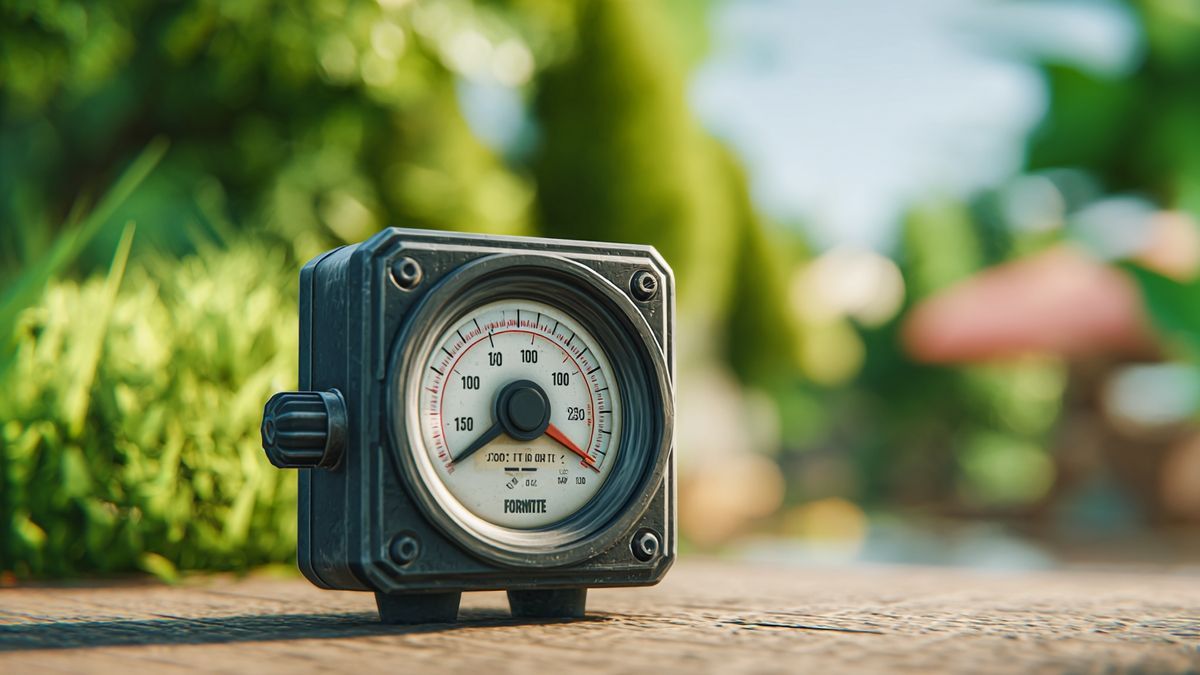
Reliable measurement in Fortnite is where most “science” challenges either get clean or get messy. You need a track with a known length, a timer that’s consistent, and rules that prevent hidden boosts. In Creative mode or UEFN testing, the most defensible setup is a fixed lane, flat ground, no vehicles, no shockwaves, no slap effects, and no random movement modifiers. Then you time a start-to-finish run using either an in-map timer device or manual timing from recorded footage (60 fps capture helps reduce ambiguity). If you want distance accuracy, you build the course using a repeated module and document how you defined each segment, so another player can reproduce it. That repeatability is the whole point of calling it experimental.
Latency is the sneaky factor. If you test online, packet delay can shift what “start” looks like. For a tighter approach, you run a private session, lock matchmaking, and keep the same hardware and settings across trials. Even your FOV, sensitivity, and frames can change how cleanly you take corners. I’ve watched players swear they ran the “same line,” then the replay shows a wider arc that adds distance. That’s human, and that’s exactly why you count multiple trials and report the spread, not just the best run. When the goal is “half Bolt speed,” the variance matters : one clean run could hit the target time; five runs show whether it’s a fluke or a pattern.
- Calibrate the track length with a repeated build module and document the mapping (grid-to-metre assumption)
- Use the same movement rules every run (no boosts, identical loadout, identical settings)
- Record every attempt and time from footage for consistent start/finish frames
- Run at least 5 trials and report average + best time, not only the highlight
- Control the environment (private session, stable FPS, same region)
Which Fortnite movement mechanics shape a 1,836 m run?
Fortnite movement mechanics decide whether a long sprint feels smooth or sloppy, and over 1,836 metres the small stuff stops being small. Straight-line speed is only one slice. Cornering is where time leaks, especially if your camera swings wide and your character path blooms outward. If your test track includes turns, then line choice matters more than raw sprinting. Slides, mantles, and short hops can either keep momentum clean or break it, depending on terrain geometry. A tiny lip in a floor piece can force an unintended micro-jump that kills rhythm, and you won’t notice it until you’re reviewing footage thinking “why did that lap feel heavy?”.
There’s also the “pacing” problem that players don’t always admit. In a long run, people start fast, then get twitchy, then they over-correct. Even though Fortnite doesn’t model fatigue like a sim, your hands do. Your thumb gets tense, your aim stick starts to jitter, and your path becomes less efficient. That’s measurable as extra distance traveled and extra frames lost on input mistakes. When the target is a half-Bolt pace equivalent (roughly 5:52 for the full distance), clean execution beats aggressive swagger. I’ve run tests where the fastest-looking attempt was slower because the player “attacked” corners and drifted outward every time.
One more factor : consistency across patches. Fortnite updates can tweak movement feel, collision, and even subtle traversal interactions. If you’re presenting results “for science,” you log the version, map code, and ruleset. That keeps it fair and neutral, and it stops the conversation from turning into “my run felt faster last month.” With a documented setup, you can actually compare sessions and see whether improvements come from skill or from a changed environment.
What “for science” data can you collect from this challenge?
Science-style data in Fortnite doesn’t mean claiming medical or athletic truths; it means collecting repeatable measurements about time, path efficiency, and execution consistency. The cleanest baseline is simple : target time (about 5:52), actual time, and the gap. Then you add context that explains the gap : number of corner corrections, mantles failed, collisions, or any forced stops. If you record footage, you can annotate “error events,” which is a fancy way of saying “mark the moments you messed up.” That’s not embarrassing; it’s the whole dataset. You can also compare different movement strategies : constant sprint versus planned slides on specific segments, or tight corners versus safer arcs. Keep the rules identical, change one variable, and you’ve got a real controlled comparison.
Another useful angle is variability. If someone can hit the time once, cool. If they can hit it three times out of five with a small spread, that suggests the method is stable. That’s where averages, best, worst, and standard deviation start to tell a story. And the story is often human : stress makes hands tense; chat distractions cause missed inputs; a tiny change in sensitivity creates oversteer. I’ve seen a player improve more by lowering sens and calming their camera than by “trying harder.” Put that in the notes and you’ve got something other players can actually apply.
Here’s a simple way to log the core numbers without overcomplicating it :
| Metric | How to capture it | Why it helps |
|---|---|---|
| Total time (s) | In-map timer or frame count from video | Direct comparison to the 5:52 target |
| Error events | Mark collisions, missed mantles, stutters | Explains time loss beyond “speed” |
| Line efficiency | Replay review: note wide corners vs tight apex | Shows whether you’re adding hidden distance |
How can players train for this run without breaking rules?
Training for a 1,836 m Fortnite run is mostly training your consistency, not finding loopholes. If the challenge rules say “no boosts,” stick to clean movement and treat it like a track workout : repeat your laps, log your times, refine one thing at a time. The first sessions should be about building a stable baseline. Run five trials, keep the best and average, and write down what went wrong in plain language. “Clipped a corner,” “camera drifted,” “panic-corrected,” that kind of note is gold because it points to fixable habits. And, yeah, it’s normal to talk to yourself mid-run. I do it. “Tight left, breathe, don’t swing wide.” It keeps your hands softer, which keeps your line cleaner.
When you’re chasing a benchmark tied to Usain Bolt’s speed (even at half), it’s tempting to go full throttle the entire time. The smarter play is controlled aggression : push on straights, stay calm in technical sections. If your course has turns, practice them in isolation. Load the map and spend ten minutes taking the same corner at the same angle until it feels automatic. That’s boring training, but it pays off over nearly two kilometers. Also, keep your settings stable while you’re collecting data. Changing sensitivity every session wrecks comparability, and you end up debating settings instead of improving execution.
For teams or friend groups running it “for science,” agree on a shared protocol : same map version, same start cue, same restrictions, and the same reporting format. That keeps it neutral and respectful, avoids drama, and lets everyone compare results fairly. If someone beats the target time, the interesting part isn’t trash talk; it’s the notes : what line did they take, where did they stay disciplined, how many error events did they avoid. That’s the stuff that moves the needle.
Conclusion
- Epic Games. « Fortnite Competitive: Official Rules ». Epic Games, s.d. Consulté le 2026-03-09. Consulter
- Epic Games. « Fortnite Battle Royale – V-Bucks Card and Fortnite Content Refund Request ». Epic Games Help, s.d. Consulté le 2026-03-09. Consulter
- Epic Games. « Cabined Accounts ». Epic Games Safety & Security, s.d. Consulté le 2026-03-09. Consulter
- Epic Games. « Parents: Epic Games Parental Controls ». Epic Games Safety & Security, s.d. Consulté le 2026-03-09. Consulter
Source: gamefaqs.gamespot.com

Inima, 35 years old, passionate about Fortnite. Always ready to take on challenges and share intense moments in the gaming world.