Fortnite’s “forever game” myth is cracking, and the signs are hard to ignore. When a studio trims a large share of staff right after price increases and reports of slowing engagement, it reads less like a temporary dip and more like a business adjusting to a new normal. I’m not saying Fortnite is “dead”, far from it. I’m saying the era of effortless momentum looks gone.
The bigger question is what happens when live-service expectations collide with culture moving on. Players age, tastes shift, new hangouts appear, and no amount of crossovers can lock a generation in place. If Fortnite’s long tail keeps stretching, it’ll be because Epic keeps earning attention, season after season, not because any game can actually last forever.
Is Fortnite really losing momentum, or just shifting shape?
If you’ve been around Fortnite Battle Royale long enough, you’ve seen the cycle : hype spikes, backlash, reinvention, repeat. That’s why the recent talk around Fortnite revenue decline and softer engagement doesn’t automatically mean “the end.” It does, however, point to something more realistic : the game may be moving from cultural obsession to long-running franchise. Reports tied to Epic Games layoffs have only amplified that reading, because staffing cuts at that scale usually signal a company trying to protect margins after a tougher stretch. Public coverage has referenced a meaningful portion of staff reductions, and while the exact internal breakdown isn’t fully transparent from the outside, the timing lines up with a broader industry slowdown and a more competitive live-service landscape. If you want a tighter recap of what’s been reported and why it matters, this overview of the Epic Games layoffs lays out the basics in plain language.
The other tell is pricing. When a publisher adjusts V-Bucks pricing, that’s rarely random. Sometimes it’s inflation and platform fees, sure, but it can also reflect a need to stabilize average revenue per user while total playtime softens. And yes, you can feel the difference in the ecosystem : fewer “everyone’s talking about it” weeks, more “that was a nice update” weeks. I’ve had nights where my squad logs in, scrolls the modes, and someone says, “Are we feeling this season, or are we just forcing it ?” That’s not doom, that’s fatigue. A “forever game” depends on steady renewal of attention, and attention is the one resource no studio can manufacture on command. The upside for Epic is that Fortnite as a platform still prints cultural moments when it hits; the downside is that culture doesn’t sit still for anyone.
Can a live-service game stay “forever” without burning out?
Live-service games age in public. Every balance tweak, every store bundle, every meta shift gets judged instantly, and players remember the “good old days” with a sharpness that can be unfair to whatever’s happening now. A lot of people don’t admit it, but burnout is often less about the game “getting worse” and more about a player’s relationship with repetition. The loop that once felt electric starts to feel scheduled. Weekly quests, timed cosmetics, rotating playlists, limited-time modes : on paper, that’s variety. In real life, it can feel like homework when you’ve been doing it for years. That’s one reason the idea of Fortnite as an eternal gaming phenomenon was always a stretch. Not because the game isn’t good, not because Epic isn’t talented, but because humans change. Friend groups split. Work hours shift. New games become the group chat topic. A teenager who lived for Chapter 1 is an adult now. That’s just reality.
Epic has tried to counter that with “event gravity” : headline crossovers, huge reveals, and live moments designed to pull everyone back in at once. When it lands, it lands hard. The end-of-season live event format is still one of the smartest retention tools in modern multiplayer, because it turns a content update into a shared appointment. If you’re tracking how those finales are framed and why they keep working, this breakdown of the Fortnite end season event format is a solid reference point.
- Content cadence pressure grows over time, because each season is measured against the best season in someone’s memory.
- Player churn is normal, but it becomes more visible when a game has already reached massive scale.
- Collab fatigue can set in : what once felt surprising can start to feel routine.
- Competitive meta stress pushes mid-skill players away when every lobby feels like a scrim.
- Monetization sensitivity rises when players feel they’re paying more for less novelty.
Are collaborations helping Fortnite, or masking a bigger issue?
Brand crossovers can be fun, and Fortnite has executed them better than almost anyone. Still, there’s a difference between using collaborations to extend a healthy game and using them to prop up attention when the organic conversation cools off. When you see constant integration of Fortnite collaborations as the main headline, it can signal that “new gameplay” alone isn’t dominating the talk the way it used to. That doesn’t mean collabs are bad; it means they’re a tool, and tools can be overused. One week it’s a film tie-in, another week it’s a legacy cartoon vibe, another week it’s a fresh franchise beat. For players who jump in occasionally, that’s exciting. For players who are always there, it can feel like a carousel that never stops spinning. And sometimes you catch yourself saying, “Ok, cool skin… but what are we actually doing tonight ?” If you want examples of how themed drops get framed for different audiences, pieces like this look at Looney Tunes-style Fortnite talk show how nostalgia marketing can be packaged into a live-service beat without changing the core loop.
There’s also a generational angle that people don’t love discussing because it sounds harsh, yet it matters : younger players don’t automatically see Fortnite as “their” defining game anymore. Some of them grew up with it already established, which changes the emotional hook. When something is already everywhere, it can feel less like a discovery and more like background noise. Epic has tried to keep the ecosystem feeling current with big tent moments, like Fortnite Star Wars events and similar franchise arcs. Those can spike attention and bring lapsed players back for a weekend. Here’s the rub : a weekend spike doesn’t necessarily translate into sustained weekly habits. You can see that tension in the way fans talk online : they show up for the spectacle, then vanish until the next spectacle. If you’re mapping how those franchise beats get positioned, this Star Wars-focused Fortnite write-up is a useful snapshot of that playbook.
Did the industry chase Fortnite too hard, and what now?

For about a decade, executives across gaming treated Fortnite’s business model as the blueprint : battle pass economies, daily retention loops, cosmetic-driven monetization, constant updates, creator ecosystems, and an always-on storefront. The result was a flood of Fortnite-like live-service games, many of which launched with heavy expectations and minimal patience. When early metrics didn’t scream “global hit,” projects got reworked or shelved fast. That mindset is part of why the current wave of layoffs across games has felt so relentless : studios staffed up for endlessly growing services, then hit the wall of reality when growth flattened. Epic’s own cuts, in that context, are less a singular shock and more a sign that even the biggest players are subject to the same math as everyone else.
What changes if Fortnite settles into a slower, steadier phase rather than remaining the north star of the whole market ? Honestly, it could be healthier for creativity. A business that stops expecting one title to dominate everything has more room to fund varied genres, smaller communities, and games that build over time. Players benefit too : fewer copycat trends, more distinct experiences. And yeah, I’m saying that as someone who loves Fortnite. I don’t want every studio on Earth trying to recreate the same retention tricks. I’d rather have Fortnite be Fortnite, and let other teams make their own weird, risky stuff. When the industry chases a single fantasy of permanence, it tends to punish anything that doesn’t scale instantly. If that pressure eases, we may see more mid-sized successes celebrated for what they are, not for what they aren’t.
What signs suggest Fortnite won’t be “eternal” in the long run?
One sign is cultural turnover : what feels definitive to one generation can feel dated to the next, even if the mechanics are still strong. Another is competition for time. Today’s online multiplayer landscape is stacked : shooters, survival sandboxes, short-session games, social platforms, and creator-driven experiences all fight for the same hours. Fortnite still pulls huge numbers, but “huge” doesn’t equal “permanent.” There’s also the reality that player hours can fall even when a game remains profitable, because whales and dedicated spenders can keep revenue up while casual engagement slides. That’s a tricky dynamic, because it can tempt publishers to lean harder on monetization, which risks irritating the broader audience and accelerating churn. When pricing changes hit, players notice. When the shop feels more aggressive, players talk.
Here’s a simple way to think about the pressure points, without pretending anyone outside Epic has perfect internal data :
| Signal players notice | What it can mean | Practical takeaway |
|---|---|---|
| Higher sensitivity to V-Bucks pricing | Monetization feels more visible when novelty dips | Players weigh purchases against perceived season quality |
| Collabs dominate headlines | Marketing beats outshine gameplay innovation | Spectacle drives spikes, but not always long retention |
| More talk about layoffs and cost cuts | Companies adjust to slower growth in live-service | Even giant games can enter a “manage the business” era |
And one last, very human point : Fortnite has always been at its best when it feels playful. When the community mood shifts from “what are we going to try tonight ?” to “what do we have to grind ?”, the spell weakens. That’s not a moral judgment, and it’s not a prediction of collapse. It’s just the truth of how long-running online games live and breathe. If you want a window into how fandom framing changes over time, it’s interesting to compare the tone of crossover chatter, from Game of Thrones-style Fortnite speculation to cartoon nostalgia beats and franchise events. The throughline is clear : Fortnite can reinvent itself, but it can’t freeze the culture around it.
Conclusion
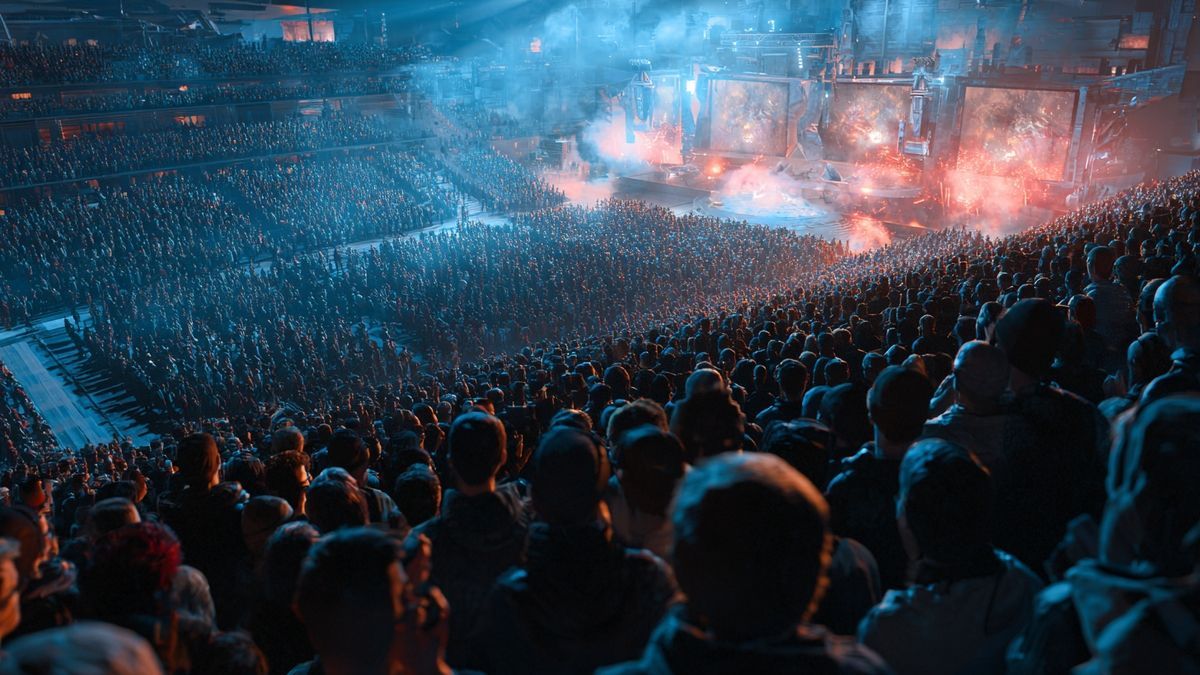
Fortnite proved that live-service scale and cultural moments can last for years, but not forever. Recent signals, like job cuts at Epic and a V-Bucks price increase, suggest a business adjusting to slower growth rather than endless expansion. Honestly, that’s not a moral failure, it’s the normal arc of entertainment.
Players grow up, tastes shift, and the next generation doesn’t always adopt the same shared hangout game. The real takeaway is practical: expect cycles, not permanence. If the industry stops treating one title as the template for everything, we may get more different, risk-taking games again.
Sources
- Epic Games. « An Update on Our Business ». Epic Games, 2023-09-28. Consulté le 2026-03-29. Consulter
- Newzoo. « PC & Console Gaming Report 2025 ». Newzoo, 2025-03-18. Consulté le 2026-03-29. Consulter
- Google Public Policy. « Epic Games v. Google ». Google, s.d. Consulté le 2026-03-29. Consulter
- Epic Games. « Fortnite Crew ». Epic Games, s.d. Consulté le 2026-03-29. Consulter
- Epic Games. « Fortnite Icon Series ». Epic Games, s.d. Consulté le 2026-03-29. Consulter
Source: www.gamesindustry.biz

Inima, 35 years old, passionate about Fortnite. Always ready to take on challenges and share intense moments in the gaming world.