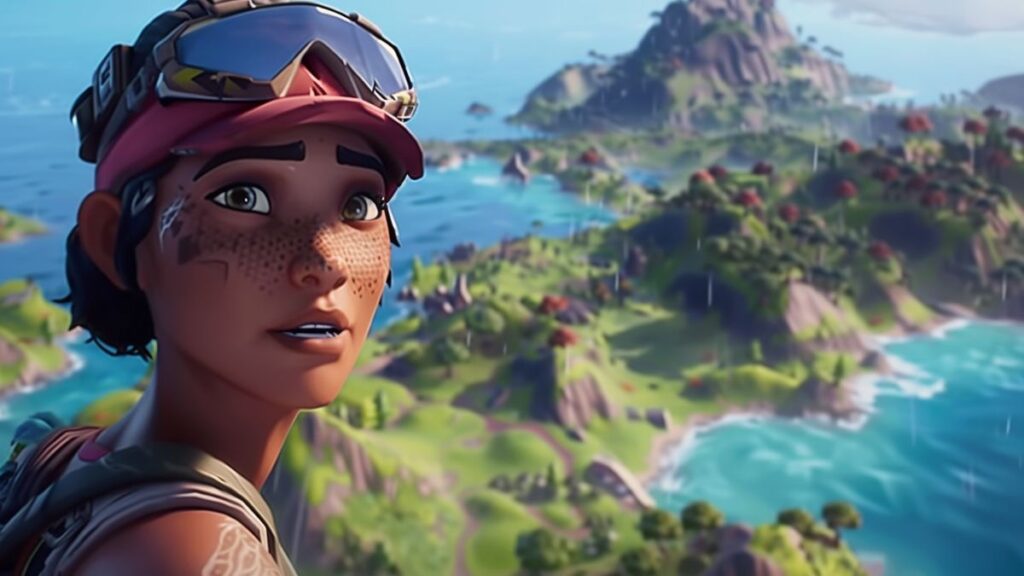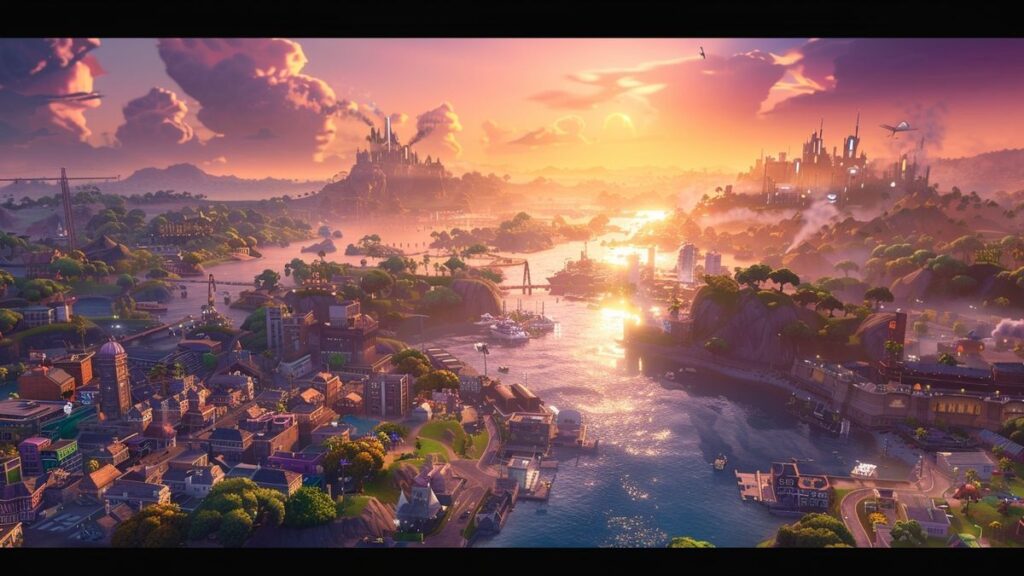
Grand Heist City is landing in Fortnite on March 14, and it’s being pitched as a mission-driven sandbox that channels the GTA-style open-world vibe without copying any specific story or characters. Built by Typical Gamer’s studio, JOGO, the map aims for open play, heists, and multiplayer chaos inside a living city. Honestly, that’s the hook, a place where players can roam, plan, and improvise instead of queuing into the same loop every match.
Development involved collaboration with KitBash3D, backed in part by an Epic MegaGrant, and JOGO is also testing in-game purchases here for the first time. With UEFN creator payouts now measured in the hundreds of millions, the timing makes sense, especially while hype keeps building for GTA 6. If you’ve wanted a bigger, city-first format in Fortnite, this is the swing.
What is Grand Heist City and when does it release in Fortnite?
Grand Heist City, often shortened to GHC, is a new Fortnite Creative experience built as a mission-driven sandbox that leans into the messy fun people associate with *open-city crime capers*, without copying any specific storylines or content from other franchises. The headline detail, and the one everyone keeps asking me about in lobbies : it’s scheduled to launch on March 14. The project is led by Andre “Typical Gamer” Rebelo through his studio JOGO Studios, and it’s being positioned as their biggest swing so far : a city that feels active, supports open play, and funnels players toward heists, objectives, and multiplayer chaos.
From what’s been shared publicly, the pitch is straightforward : bring that third-person, free-roam energy into Fortnite’s ecosystem, using UEFN tools and a modern asset pipeline. That matters because Fortnite islands can feel “single-note” when they’re built around one mechanic only. Here, the intent is a living city where you can roam, take missions, and run into other players doing the same. If you’ve ever loaded into a Creative map and thought, “OK… cool for five minutes, then what ?”, GHC is clearly trying to solve that with layered goals and replay-friendly systems. And yes, the timing is smart : it lands while players are waiting for the next big chapter of Rockstar’s long-running series, with GTA 6 still slated for November 2026, based on the current public schedule.
Quick snapshot : Grand Heist City is a Fortnite UEFN city sandbox built around heists, open play, and multiplayer mayhem, launching March 14.
How does Typical Gamer translate GTA vibes without copying?
Typical Gamer has been clear about where his inspiration comes from : he’s a lifelong fan of Grand Theft Auto, and he built early streaming momentum making tutorials tied to Rockstar’s Red Dead Redemption era. That backstory matters because it frames the creative goal as influence, not duplication. You can deliver open-world pacing, third-person action, and a city built for chaos while still respecting intellectual property boundaries : no lifted characters, no borrowed missions, no recognizable map layouts, no trademarked iconography. The public messaging around GHC sticks to broad descriptors—living city, heists, open play, multiplayer mayhem—and that’s generally the right lane if you want to evoke a genre without stepping on anyone’s rights.
There’s also a practical angle that’s easy to miss if you don’t build in UEFN : Fortnite islands have memory limitations, and Rebelo has said that constraint has been part of the fight since day one. If you’ve ever shipped a Creative project, you know the pain : you want dense streets, readable signage, drivable-feeling spaces, interiors, verticality… then memory budgets force trade-offs. So the “GTA-style” feel will likely come from systems and flow—missions that push you across districts, objectives that spark player conflict, and a city layout that encourages chance encounters—rather than raw scale for scale’s sake. And honestly, that’s what people remember anyway : the wild stories, the improvisation, the chat yelling “no way that just happened”, not whether a block has 20 buildings or 50.
Rebelo has also mentioned a consumer-friendly angle : for players hyped for the next big open-world crime game, this is something to play in the meantime. He even floated the idea that if a premium release lands at a high price point, a free-to-access Fortnite experience could scratch a similar itch. That’s not a promise of equivalence, it’s more a statement about accessibility : Fortnite UGC can offer that free-roam sandbox mood without asking players to buy a separate $70–$100 title.
What gameplay can players expect from heists and open play?
GHC is being described as a full-scale sandbox with missions and heists, which suggests it won’t be a single scripted run you finish once and forget. In a well-built heist map, the fun comes from repeatable loops : route planning, risk management, escape improvisation, and the social layer of teammates doing something unexpected at the worst time. Fortnite’s toolkit is strong here because creators can use devices, triggers, AI, and custom logic to support *objective-based chaos* while keeping the controls familiar.
What I’d expect, based on how successful UEFN sandboxes usually work, is a balance between guided jobs and player-made stories. You drop into a district, you pick up a mission thread, you run into another squad mid-objective, and suddenly your “clean” plan turns into a running firefight across rooftops. That’s where multiplayer mayhem stops being marketing text and becomes the actual product. If JOGO nails the pacing—quick entry, clear goals, fast restarts, meaningful rewards—players will keep rotating in because every session will feel slightly different. And if you’re the type who just likes to roam, test loadouts, or roleplay, a city map can support that too, as long as it’s built with lots of readable landmarks and small interactions that keep the space from feeling empty.
- Heist-style missions designed for squads, with objectives and escapes that can go off-script
- Open play city roaming where player encounters create unpredictable fights and alliances
- Replay-focused loops : short missions, quick resets, and varied routes across districts
- Social chaos : third-party interruptions, chases, and “we’re improvising now” moments
Who built the map and what makes the city feel alive?
Grand Heist City is a collaboration between JOGO Studios and KitBash3D, with development supported by an Epic MegaGrant that JOGO received. KitBash3D isn’t new to high-end world building, and while this is their first partnership with a dedicated UEFN studio, they’ve already delivered large-scale asset work for Epic across well-known IP collaborations such as The Walking Dead and Teenage Mutant Ninja Turtles. That track record signals they understand the bar Fortnite players have for “this actually feels polished”, especially when you’re trying to sell the fantasy of a functioning city rather than a pretty backdrop.
KitBash3D’s leadership has framed the project as proof that creator-led studios can ship richer worlds without needing the kind of enormous headcount that traditional AAA open-world games rely on. In plain terms : smart pipelines, reusable modular assets, and tight integration with gameplay logic can get you surprisingly far. The “city feels alive” part usually comes down to density and intention : sightlines that pull you forward, intersections that naturally create conflict, interiors or alleys that give you escape options, and enough environmental storytelling to make each area distinct. If you’ve ever played a city map where every street looks identical, you know how fast that gets stale. A strong UEFN city needs memorable neighborhoods and clear mental mapping so players can say, mid-fight, “meet me by the bank”, and everyone instantly knows where that is.
There’s also an interesting industry angle here : Epic has stated that UEFN payouts have surpassed $700 million, which helps explain why studios are investing serious time and art budgets into Fortnite islands. When creators can fund real production—proper art, design, QA, live updates—the end result tends to feel less like a weekend prototype and more like a long-running live experience. That’s the lane GHC is aiming for : a city you return to, not just a flashy map you screenshot once.
Will Grand Heist City include microtransactions and UEFN payouts?
Yes, and this is one of the most newsy parts : with Grand Heist City, JOGO Studios plans to offer in-game purchases for the first time. That shift is being framed internally as a sign the market is mature enough to test microtransactions inside a large, content-rich island. JOGO’s leadership has pointed to the broader creator economy context, including the scale of UEFN payouts and the way other UGC platforms have reached enormous payout totals. The argument is basically : if you’re going to ask players to spend, the island has to earn it with depth and retention, not just a quick gimmick.
One detail that stands out is the statement that 100% of in-island spending is currently paid out to creators, paired with the idea that a “deep enough experience” gives players something worth supporting. That doesn’t mean every player should spend, and nobody should feel pressured. It does, though, explain why studios are thinking more like live-service teams : long-term updates, feature roadmaps, and a city sandbox that can expand. Practically speaking, if microtransactions show up, players will want clarity : what’s cosmetic, what affects gameplay, and how fairness is protected. Fortnite’s community has a sharp nose for anything that smells pay-to-win, so the safest path is usually cosmetics, convenience that doesn’t change power, or optional perks that stay within Epic’s rules.
Conclusion
Grand Heist City looks set to bring a GTA-style sandbox feel into Fortnite on March 14, with open play, heists, and chaotic multiplayer moments inside a city that’s meant to feel “alive”. Honestly, it sounds like the kind of map you can boot up for 15 minutes or lose an evening to, no pressure.
Built by JOGO Studios with KitBash3D and supported by an Epic MegaGrant, it also signals a more “studio-level” push in UEFN. With in-island purchases planned and UEFN payouts already massive, this release reads like a real test of what a mission-driven city map can sustain long-term.
Sources
- Variety. « Typical Gamer Is Bringing Grand Theft Auto-Inspired ‘Grand Heist City’ to Fortnite ». Variety, 2025-03-05. Consulté le 2026-03-07. Consulter
- Epic Games. « Epic MegaGrants ». Epic Games, s.d. Consulté le 2026-03-07. Consulter
- Epic Games. « Unreal Editor for Fortnite (UEFN) ». Epic Games, s.d. Consulté le 2026-03-07. Consulter
- KitBash3D. « KitBash3D ». KitBash3D, s.d. Consulté le 2026-03-07. Consulter
Source: variety.com

Inima, 35 years old, passionate about Fortnite. Always ready to take on challenges and share intense moments in the gaming world.