Fortnite just dropped AI-associated “brainrot” characters into the Item Shop, and I’m not sold. I’m usually fine with modern meme culture, even the intentionally messy stuff. There’s real human timing in absurd animation trends, and as someone who pays attention to language, I get why a throwaway phrase can turn into a shared in-joke. But when the core of a meme is generative AI content, it starts to feel less like humor and more like a remix machine chewing through other people’s work. Yeah, that’s where I pause.
The bundle centers on Ballerina Cappuccina and Tung Tung Tung Sahur , with skins priced at 1,500 V-Bucks each and a full set running 2,400 V-Bucks . Fortnite Item Shop pricing already gets side-eye after recent increases, so asking real money for characters tied to AI-made meme roots? I’m sorry, that’s a tough sell, especially when players are still talking about Epic’s layoffs and what “fresh content” is supposed to mean.
Even if Fortnite’s in-game models were built by human developers, the vibe doesn’t change much for me because the appeal is still anchored in gen-AI meme branding. And I’m clearly not alone: community reactions have been loud, and not in a good way. Player trust is fragile, and this drop lands awkwardly at best.
What are Fortnite’s AI-brainrot skins, and why talk about them?
Fortnite has never been shy about internet culture, so the arrival of the so-called Brainrot Bundle didn’t feel random. The two headline skins, Ballerina Cappuccina (a dancing coffee cup character) and Tung Tung Tung Sahur (a smiling log with a bat), come from a meme wave that’s widely associated with generative AI. You can grab each skin for 1,500 V-Bucks, with extra cosmetics priced separately : the Ballerina’s pickaxe at 800 V-Bucks, and several other items at 500 V-Bucks each. The full bundle has been listed at 2,400 V-Bucks, which lines up with a real-money cost around $22,99 in the U.S. store pricing tier, depending on how you buy your V-Bucks. That’s not pocket change, especially right after broader chatter about V-Buck price increases.
I’m pretty open to meme-y chaos in-game. I grew up on absurd humor, and I can respect the craft that goes into short-form animation trends when real people are animating, writing, and iterating. Where I personally hesitate is the pipeline behind it. With these characters, the conversation isn’t just “are they silly” (they are) : it’s whether Fortnite is rewarding a gen-AI meme supply chain that leans on scraping, remixing, and outputting a mash-up of existing ideas. Epic hasn’t clearly stated, in a way the average player can verify, whether the in-game models were made fully by in-house artists or partially derived from AI workflows. Even if you assume the final Fortnite skins were built by human developers, the AI-origin meme branding is still what’s being sold.
Quick context for players
These skins were teased around the time of Fortnite Chapter/Season marketing, and they landed in the Fortnite Item Shop with standard cosmetic pricing. The debate is less about “memes in Fortnite” and more about what kind of creative pipeline gets celebrated and monetized.
Why do AI-generated meme characters feel off in Fortnite?
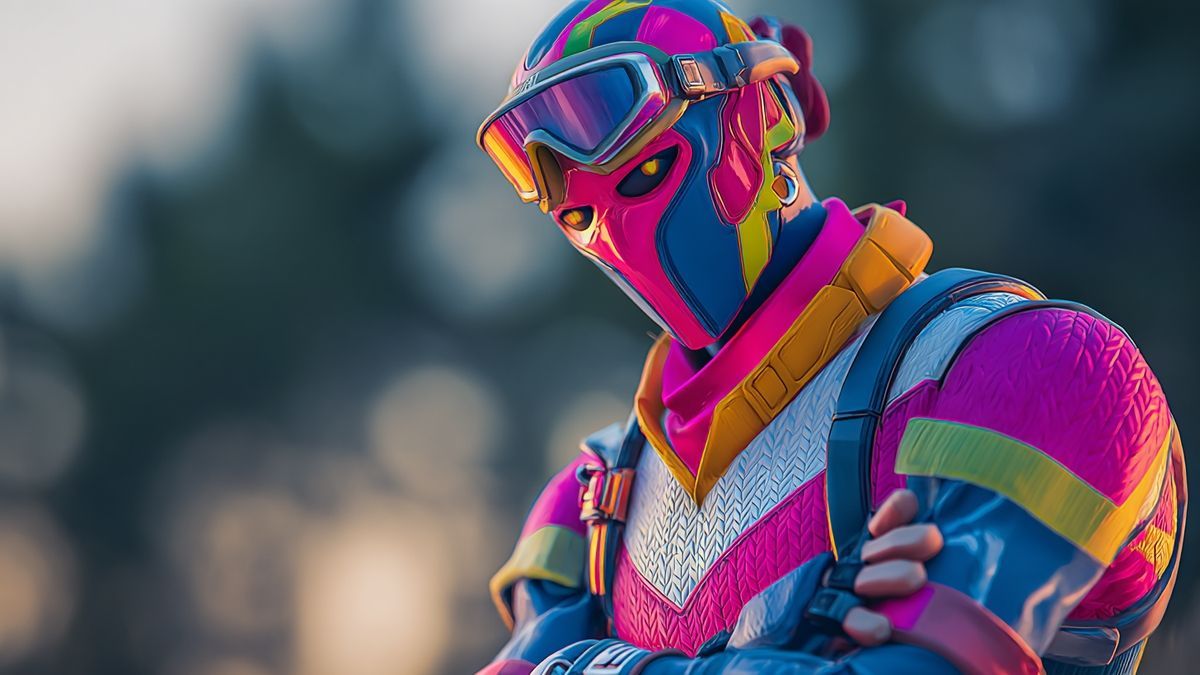
When Fortnite collabs work, they land because they carry a recognizable human fingerprint : a studio’s art direction, a musician’s visual world, a franchise’s consistent design language. With AI-generated meme characters, that signature gets fuzzier. The humor often isn’t built from character writing, timing, or a shared set of references; it’s built from the shock of the output itself. And yeah, I’ll say it plainly : that kind of joke can be funny once, then it starts to feel disposable. From a player’s perspective, buying a skin is buying into a vibe you’ll wear for weeks. If the vibe is “random internet output,” it doesn’t age the way a well-designed original outfit does. Fortnite’s best cosmetics usually have readable silhouettes, strong color logic, and an internal consistency that feels intentional. Meme characters tied to gen-AI aesthetics often look intentionally “wrong,” which is the point, but it clashes with how many players curate their lockers.
There’s also the trust layer. A lot of creators, artists, and players are still arguing about AI training data, consent, and compensation. I’m not here to accuse any one company of a specific practice without proof, because that’s not fair. Still, the broader ecosystem around AI meme production has been messy enough that seeing it turned into a paid Fortnite bundle is, at minimum, awkward. It’s not about being anti-tech; plenty of tools help artists. It’s about whether the main “selling point” is a machine-generated mash-up, rather than a concept developed by human creatives from the start.
- Replay value : humor based on randomness burns out fast.
- Locker identity : players often want skins that feel authored, not generated.
- Creative credit : unclear provenance makes people uncomfortable.
- Brand fit : Fortnite thrives on curated chaos, not arbitrary chaos.
Is this bundle worth 2,400 V-Bucks after price changes?
Value in Fortnite cosmetics is always personal, but the timing matters. The 2,400 V-Bucks bundle price lands in the “real money decision” zone for most players. If you’re buying because you genuinely love the characters, fine, that’s your call. If you’re buying because it’s the meme of the week, I’d honestly slow down. Fortnite rotates the shop constantly, and hype has a way of making a skin feel “must-buy” for about twelve hours. Past that, you’re left asking whether you’d still run it when the joke isn’t fresh. For me, that answer is no, which makes the price harder to justify. I’d rather put those V-Bucks toward an outfit with stronger design longevity, or even toward collabs that feel carefully art-directed.
There’s a second layer that’s hard to ignore : community sentiment. Around the same period, Epic publicly discussed business pressure, including a reported drop in engagement and major staffing cuts. Those are real human topics for the workers affected. So when a gen-AI-adjacent cosmetic drop appears in that same window, a slice of the fanbase reads it as tone-deaf, whether that was the intent or not. I’ve seen the subreddit posts where people basically say, “people lost jobs and this is what we’re selling?” That’s harsh, but it’s also a predictable reaction in a live-service game where players see every shop update as a signal of priorities. Even if these skins were finished long before any news broke, perception still hits.
My quick “worth it” check
If the purchase is driven by short-lived meme momentum, I pass. If it’s driven by a real attachment to the design and you’ll run it often, it can make sense. The awkward part is that gen-AI origins muddy the emotional “collectible” value many players look for.
Did Epic use AI for the in-game models, and does it matter?
Right now, there’s no universally visible label in the Item Shop that says, “this 3D model was produced with AI,” and Epic hasn’t put out a simple, player-facing breakdown that clears it up for this specific bundle. That’s why the debate keeps circling. A meme can be AI-driven in its origin story while the final Fortnite asset is still hand-made by a human team. Both things can be true. And yes, it matters, because players are increasingly asking for provenance : who designed it, how it was made, and whether anyone’s work was reused without consent. Without that clarity, people fill the gap with guesses, and that’s where trust gets damaged.
From a practical standpoint, Fortnite’s internal standards for rigs, animations, cosmetics compatibility, and performance are high. That tends to suggest significant human production work, because shipping a skin that behaves correctly across emotes, weapons, back blings, and all the weird edge cases is serious effort. Still, even if the modeling and texturing were done by people, the bundle is monetizing characters famous primarily because of AI-generated meme culture. So the question shifts from “did Epic press a button” to “what kind of creative ecosystem is Fortnite validating with store space?” I’m not interested in gatekeeping comedy or telling anyone what they’re allowed to enjoy. I just want Fortnite’s creative direction to keep rewarding artists and designers whose work is clearly authored.
If you’re trying to make sense of where Fortnite’s collabs and character drops are headed, it helps to look at other recent crossovers and licensed content discussions. For related reads, check https://0kill-7assists.com/blog/fortnite-solo-leveling-skins/ and https://0kill-7assists.com/blog/fortnite-solo-leveling-arise/, where the value proposition is more about recognizable IP craft than algorithmic weirdness.
How could Fortnite add memes without leaning on AI characters?
Fortnite can absolutely keep the internet energy without packaging AI-bred characters as premium cosmetics. The simple path is to lean on human-made community creativity : highlight animators, comedy creators, and artists through official commissions, creator spotlights, or even time-limited micro-collabs that are clearly credited. I’ve watched Fortnite players rally behind goofy emotes, absurd back blings, and satirical loading screens when they feel rooted in real creative labor. Honestly, that’s the part I miss here : the “someone made this on purpose” feeling. Give me a weird, surreal skin designed by an in-house concept artist with a visible style sheet, and I’m listening. Give me an outfit that feels like it came from a prompt-first meme vortex, and I’m out.
There are already examples of how Fortnite can ride culture without losing authorship : celebrity tie-ins, entertainment crossovers, sports partnerships, and story-driven seasonal content. Some of them land, some don’t, but at least you can usually trace the creative origin. If you want a sense of how these broader collaborations get framed, you can skim https://0kill-7assists.com/blog/ed-sheeran-pokemon-collab/ for a different angle on brand collaborations, or https://0kill-7assists.com/blog/iger-fortnite-casey/ for commentary-style coverage that shows how public perception can swing based on timing and messaging. None of that requires leaning on gen-AI novelty as the hook.
Here are the kinds of moves I’d rather see, because they keep the humor while respecting human authorship :
| Approach | What players get | Why it feels better |
|---|---|---|
| Commission human meme artists | Skins, sprays, emotes with clear credits | Supports real creative labor and adds authenticity |
| Creator-made emote packs | Short, funny sets tied to trending audio | Memes stay fresh without selling prompt-born mascots |
| Clear labeling on AI-adjacent items | Transparency before purchase | Builds trust and avoids guesswork |
If you want another example of Fortnite’s culture-meets-public-figures coverage, https://0kill-7assists.com/blog/fernando-mendoza-alysa-liu-fortnite/ is worth a look; it’s a reminder that Fortnite doesn’t need AI meme avatars to stay in the conversation.
Conclusion
For me, AI-generated meme skins like Ballerina Cappuccina and Tung Tung Tung Sahur don’t land, not because memes are “too modern”, but because machine-made mashups feel disconnected from the hand-built charm that usually makes Fortnite crossovers click. I can laugh at absurd humor, sure… but I still want a human thumbprint somewhere in the design.
The timing also stings: higher V-Buck prices, layoffs, and then a bundle that reads like “content for content’s sake”. Even if Epic’s artists modeled these skins themselves, the gen-AI origins hang over the release, and that affects how it’s received.
I’d rather see creator-led collaborations, clear crediting, and stronger curation, so new drops feel earned, not random. If Fortnite wants trust back, that’s the lane that feels more respectful, and honestly, more fun.
Sources
- Epic Games. « Fortnite Item Shop ». Epic Games, s.d. Consulté le 2026-04-05. Consulter
- Epic Games. « An Update on the Future of Epic Games ». Epic Games Newsroom, 2023-09-28. Consulté le 2026-04-05. Consulter
- Epic Games. « Fortnite Chapter 7 Season 2 ». Fortnite, s.d. Consulté le 2026-04-05. Consulter
Source: www.pcgamesn.com

Inima, 35 years old, passionate about Fortnite. Always ready to take on challenges and share intense moments in the gaming world.